
Written by Lorrie Reynolds
DOG AGILITY CONTACT TRAINING: RUNNING CONTACTS VS STOPPED CONTACTS
When it comes to dog agility contact training, everyone who teaches ultra-competitive agility will tell you this:
“You can’t be competitive if you don’t have running contacts.”
But before you decide on your contact method, I want to throw a little “brutal honesty” out there and give you my best piece of advice regarding contacts:
Unless you’re aiming for world team or expect to be a contender for first place at a national competition, running contacts are probably not the best choice for your team.
There, I said it. I’m expecting to get some outraged feedback, but if you have an open mind, let me explain. I think there are some very specific requirements if you are going to teach your dog running contacts.
Before beginning dog agility contact training, it’s important to think carefully about choosing the right agility contact criteria for your team. You also need to consider whether your dog is mentally and physically ready for contact training.
WHAT YOU NEED TO SUCCESSFULLY TRAIN RUNNING CONTACTS
Solid, consistently successful running contacts require these things:
- Frequent access to one or both pieces of contact equipment (once per week won’t cut it)
- Lots of training time for repetitions, repetitions, repetitions
- Exceptional directional commands at the contact exit, or a handler who can keep up with her dog and meet him at the bottom
- An experienced handler with a good enough “eye” to see and only reward performances that meet criteria
- Precise reward placement that will improve the contact performance
So why is this important?
Because most of us don’t have either the time, dedication, experience, or access to the contact obstacles to really teach running contacts successfully. (Including myself in the whole “don’t have the time” category).
That means many handlers spend YEARS trying unsuccessfully to teach their dogs running contacts, becoming more and more frustrated as they throw money away at trials on non-qualifying runs. It’s heartbreaking. And retraining is always harder than training something solidly from the start.
So, back to my advice from the beginning. Unless you have everything on that “required” list, I recommend that you teach your dog a solid stopped contact that can later be transformed into a quick-release after your dog has some ring time under his belt.
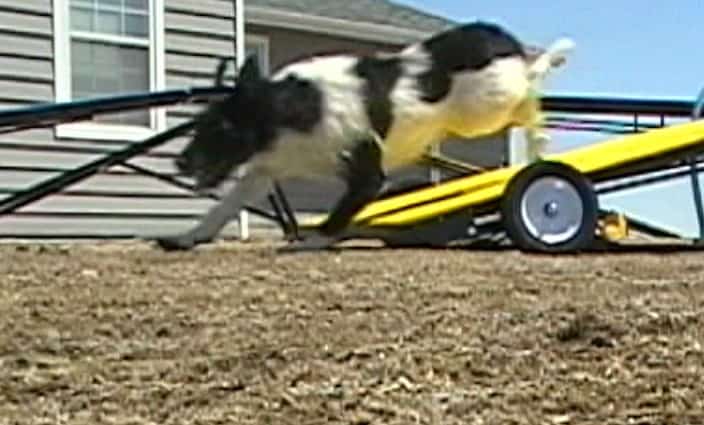
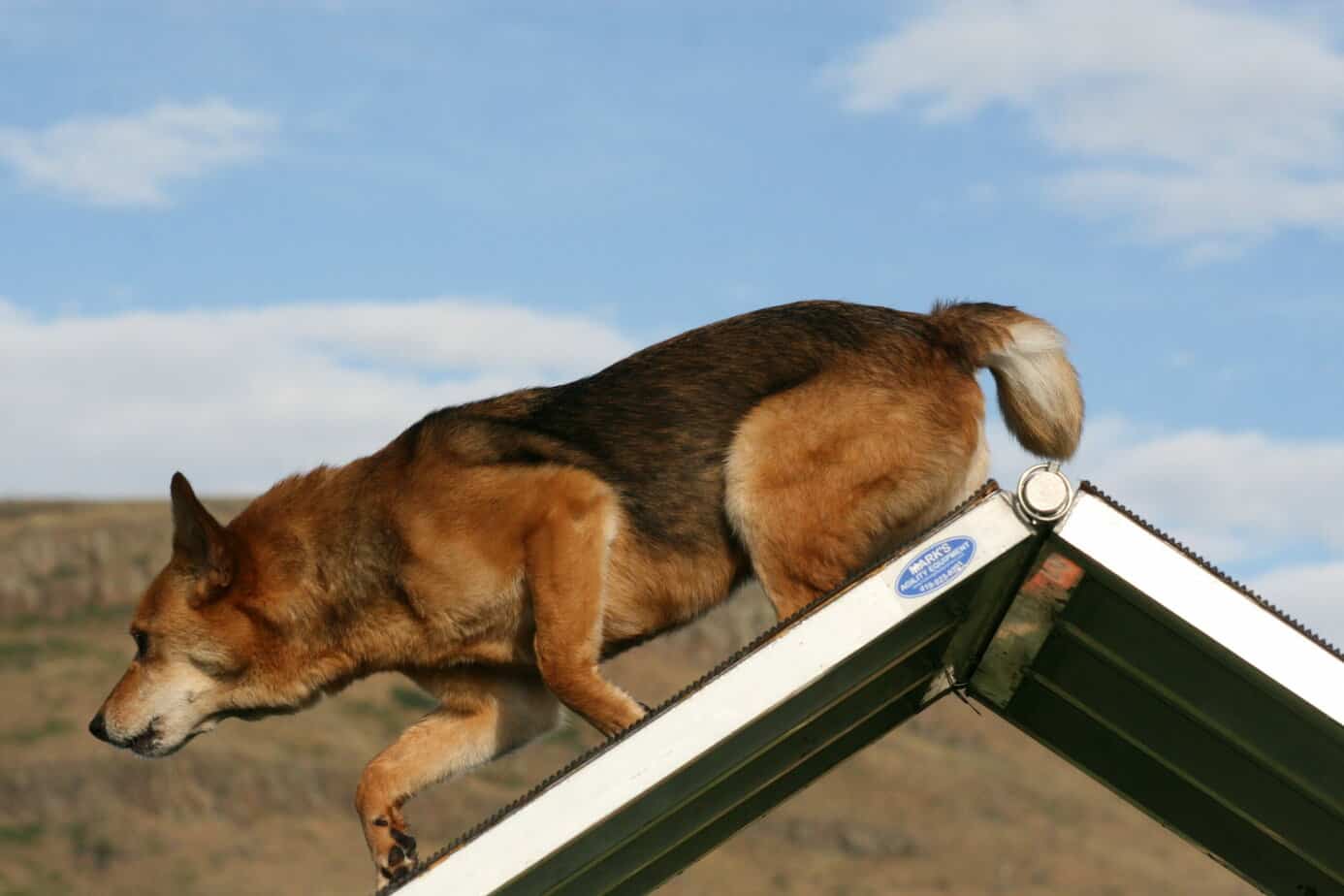
DOES YOUR DOG REALLY NEED RUNNING CONTACTS IN DOG AGILITY?
Here’s a fun fact – in 2016 and 2018 at NADAC Championships, only one of the top three dogs in my height class (16″) had running contacts, and it wasn’t mine.
Many teams that participate in NADAC, ASCA, CPE, and AKC choose stopped contacts instead of running contacts. What you choose is partly influenced by which venue you run in the most and what your instructor recommends.
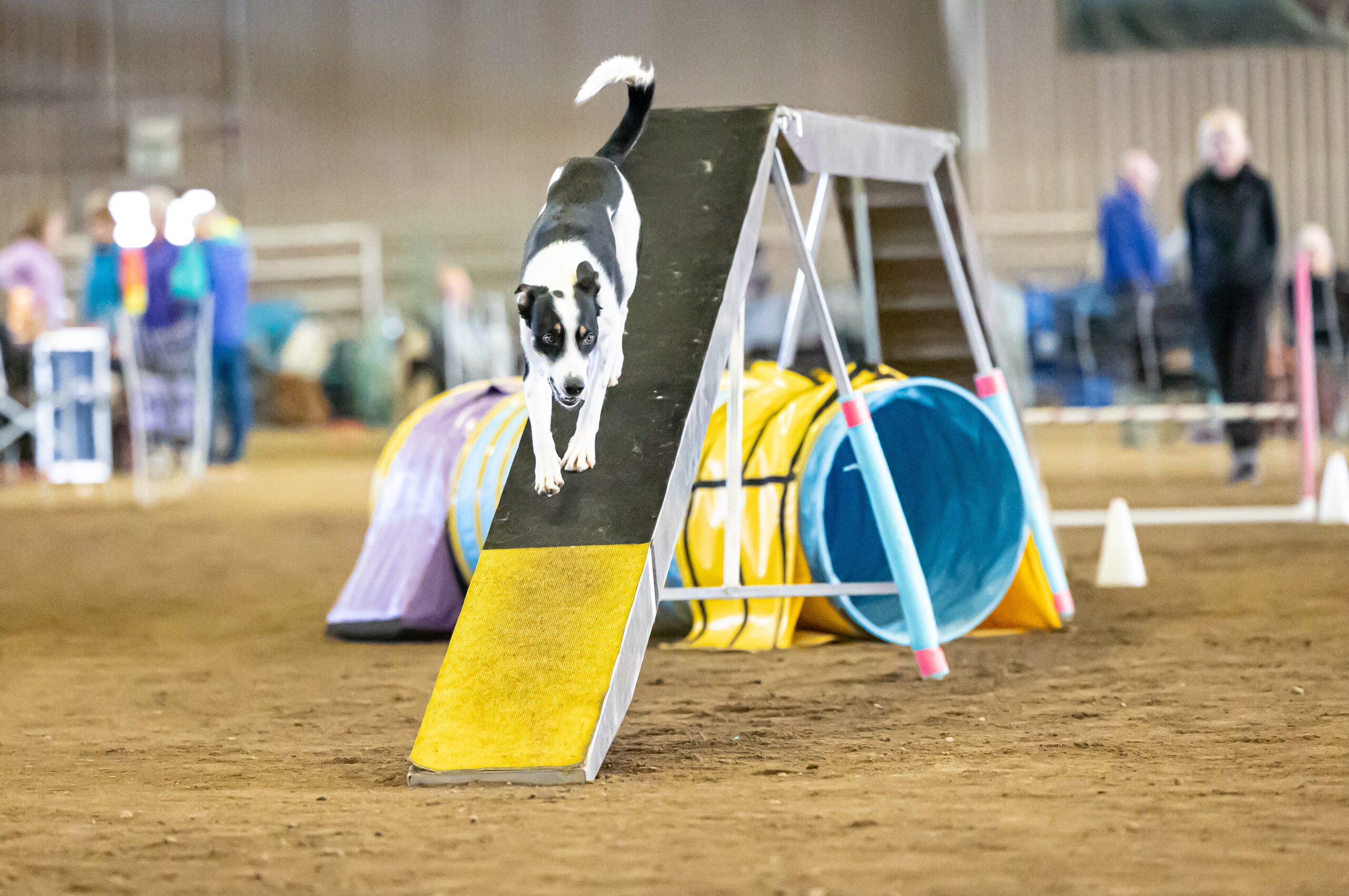
WHY STOPPED CONTACTS WORK FOR MOST AGILITY TEAMS
Successful dog agility contact training requires clearly defining training criteria before you begin. That means making a firm decision between running and stopped contacts.
Stopped contacts are the best choice for 80% of agility teams, especially when the handler is less experienced. You’ll be more successful and get to the top faster with consistent stopped contacts than you will with hit-or-miss running contacts.
Stopped contacts are easier to train, easier to maintain on an ongoing basis, easier for the dog to understand, and easier for new handlers to reward consistently. They don’t require split-second timing for directionals at the end of the contact. Judges are better able to determine if the dog correctly performed the obstacle, so there is a potential for fewer faults.
That’s my biggest tip for determining which contact method is right for your team. I hope it helps with your decision.
Want to learn how I teach my stopped contacts? The foundations on the flat through the complete obstacle performance and more is taught in The Agility Playground. You can learn more and join us in the membership HERE!
You Might Also Like…
5 Ways to Crush It at Your Next Dog Agility Seminar
Going to a dog agility seminar so you can learn with your dog? Check out these five tips to maximize your return on investment!
Why You Need an Experienced Instructor for Safe Dog Training
An experienced instructor for agility, tricks, conditioning, and other dog sports is required for safe training and can save you headaches and heartaches in the future.
Dog Training Methods: The Thomas Edison Approach
Approach training like the inventor Thomas Edison, and have fun experimenting with new dog training methods when your dog is stuck.
Cover photo courtesy of Dog Agility Photos for Fun.
Third photo courtesy of Stover Photography.