
Written by Lorrie Reynolds
Distance for Agility: The “Yes and No” Answer
Here’s a question I get asked all the time: Can you teach distance for dog agility as a totally separate skill?
Distance handling is one of the most requested topics I teach, and for good reason – it can feel like the missing piece that unlocks a whole new level of agility performance. My book, Agility FUNdamentals for Distance, the seminars I’ve taught in person since 2005 and my online membership (The Agility Playground) all center on helping handlers build real reliable distance with their dogs.
The answer to that frequently asked question is yes…and no. Let me explain.
I always say that any team, of any size and physical ability can achieve the distance required for an Elite Chances or Masters FAST course. That is the truth. If you take my online courses or come to a seminar, you can definitely learn how to get your dog out the 20’ or 30’ required for those courses.
But am I really teaching “distance”? The answer to that is…no.
Distance is a Side-Effect (Not a Destination)
Before you get up in arms and decide I’ve been lying all these years, hear me out.
You know that saying that “Life is what happens when you are making other plans”? Well, distance for agility is kind of like that.
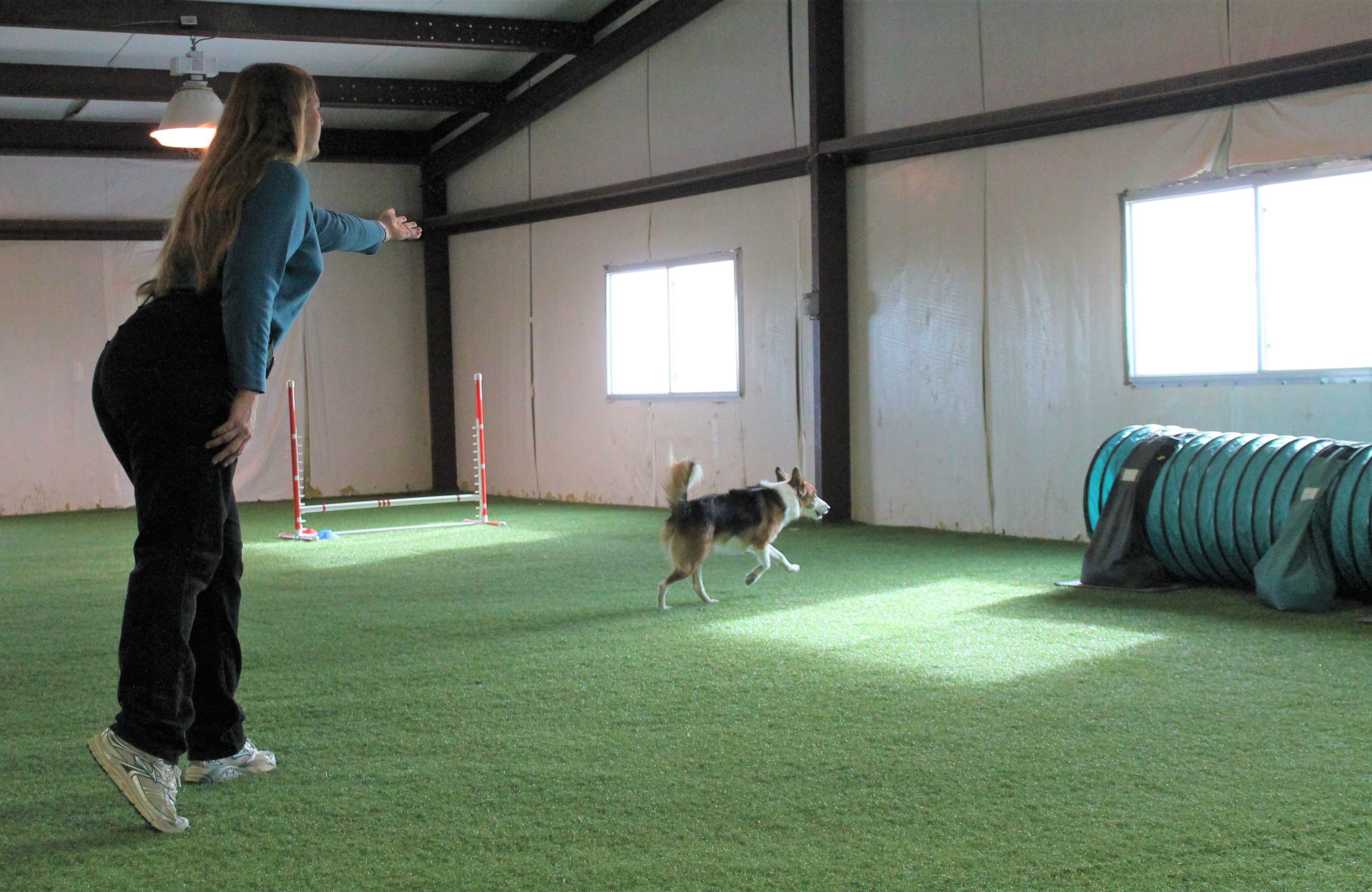
Agility distance is what happens when you have clear communication, consistent cues, independent obstacle performance skills, connection, and a confident dog. It’s a “magical” side-effect of putting a handling system and training program together that helps your dog understand exactly what you are asking for.
The Building Blocks of Distance for Agility
Clear Communication
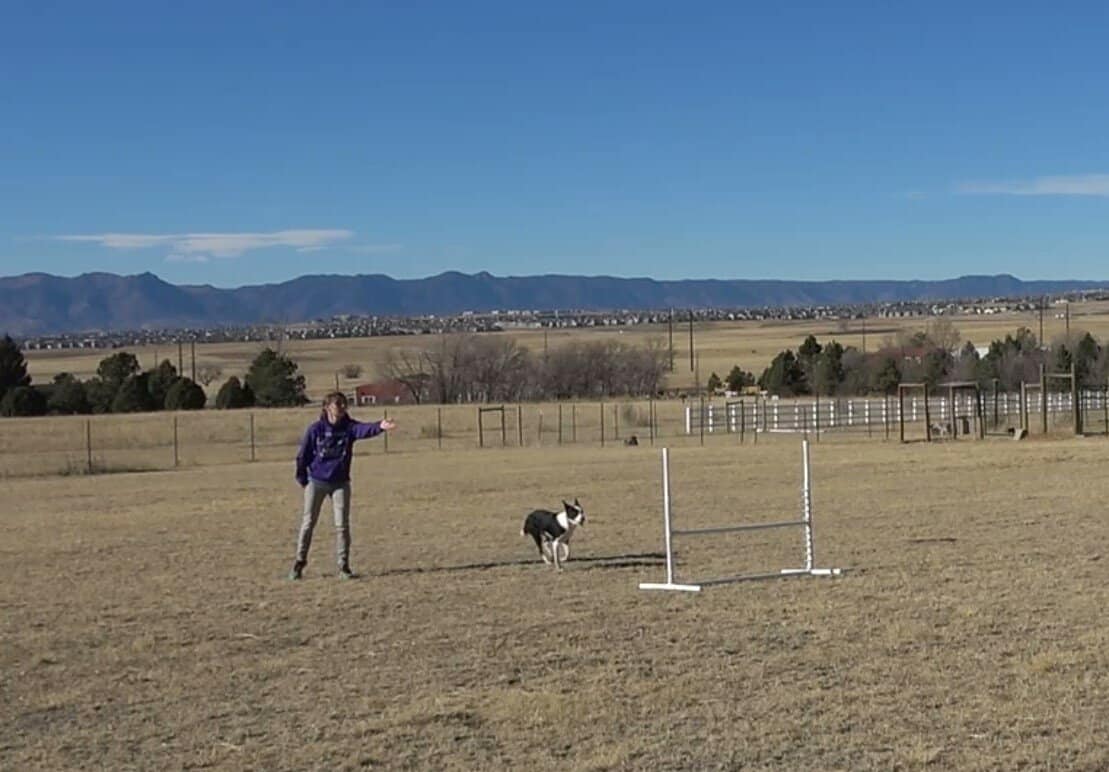
Clear communication means using the Hierarchy of Cues to develop a system that tells your dog exactly what you want him to do. When you combine your motion, body language and position, and the other elements, you end up with a handling system that is crystal clear to your dog.
Consistency
Consistency instills confidence in your dog that says he can count on you to give him the right cues at the right time to navigate a course. He can trust that you mean what you “say” with your body and the same cue means the same thing every single time.
Independent Obstacle Performance
Independent obstacle performance is one of the five essential skills for every agility venue, and as you are working on independence using the CLAWS method, you incorporate distance to encourage your dog to work independently. Distance isn’t the main goal, but if your dog can confidently perform obstacles independently, as you improve those skills, and work on exercises to encourage independence, you are also increasing your distance.
Connection
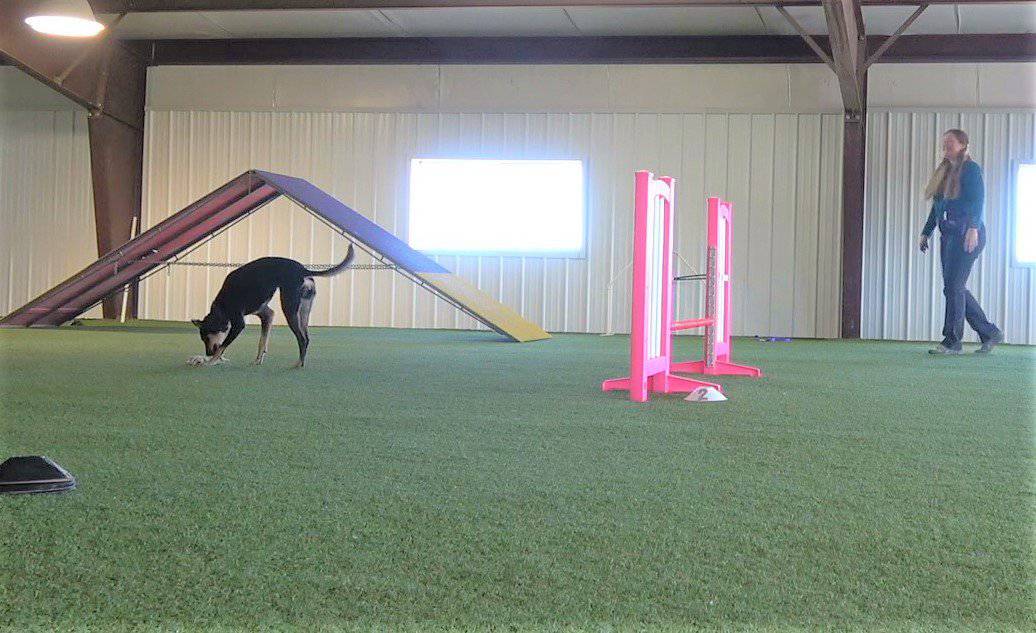
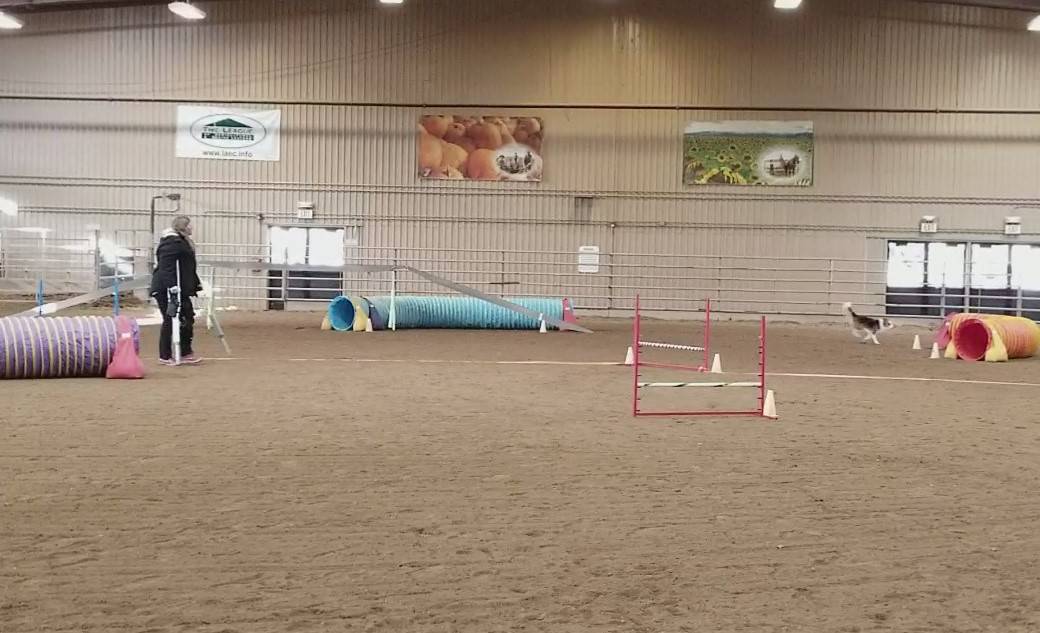
When you and your dog are working as a team, following the same plan through the course, that is connection. Connection is built by creating a good working relationship, being clear and consistent, trusting that each half of the team will perform their job, and enhancing your dog’s confidence through training. A connected team with the right communication and skills is a team that can work at a distance.
Confidence
Before you can work apart, your dog has to have confidence in his abilities to find the line, complete the obstacles independently, and read your cues. He has to have confidence in you so he trusts your cues and knows you won’t make him do things over if you are the one who made the mistake. As your dog gains confidence, he also naturally gains distance.
So Can You Actually Teach Distance for Dog Agility Separately?
Distance as a standalone skill, disconnected from the rest of your agility training, is not a skill you can reliably teach in isolation. Sending a dog to a baited target 30 feet away will not translate into completing weave poles at 30 feet – at least not without the foundation underneath it.
But here’s the good news: if you build clear communication, consistency, independent obstacle performance, connection, and confidence into every part of your training, distance will follow. It is absolutely achievable for teams of any size and physical ability. You are not teaching distance directly – you are building the conditions that make distance possible.
That is a very important distinction, and it changes how you approach your training.
Want to read more about building the required skills? The 5 Skills for Distance on the Agility Course article is a great next read.
If you want structured, step-by-step guidance on building all of these skills together, The Agility Playground membership includes distance training lessons for every level. Learn more here.
You Might Also Like…
The Complete Guide to Dog Agility Distance Handling
Dog agility distance handling isn’t magic — it’s a skill any team can build. This complete guide covers the 5 essential skills, the 6 Cs framework, how to train distance, and the most common mistakes to avoid.
Dog Agility Distance Training – What is the CLAWS Framework?
Independent obstacle performance is the foundation of dog agility distance training. Learn what CLAWS means and how this simple framework can transform your distance work.
5 Ways to Reward Your Agility Dog for Distance Training
If your agility dog keeps running back to you mid-run, reward placement may be the issue. Here are 5 ways to reward your agility dog for distance that actually work.
Get tips, stories, discounts, and early notification of events and new courses delivered straight to your inbox! Join the community!
Cover photo: Courtesy of Dog Agility Photos for Fun