
Written by Lorrie Reynolds
Having the tools to reward your agility dog for distance while he is actually working away from you makes him more likely to continue to want to move away when cued.
Why Reward Placement Matters When You Train Your Agility Dog for Distance
One of the most overlooked aspects of agility distance training is where (not just how) you reward your dog. If you always reward your agility dog for distance work while he is standing right in front of or next to you, you are unintentionally teaching him that coming back to you is the goal. And then you wonder why he won’t stay out on the line.
Here is a real example of how this plays out, and five practical ways to fix it.
Her fancy footwork was impressive as she danced around while she used her arms to keep her balance so she could avoid stepping on her dog. The dog who had run straight at her yet again after completing just three obstacles. Once she was stable, she reached down and gave him a treat.
Joanne’s main complaint was that her dog couldn’t stay out along a line of obstacles. He would do two or three obstacles and then run back to her, frequently causing her to have to maneuver like a gymnast to avoid him. She thought her dog needed better distance training.
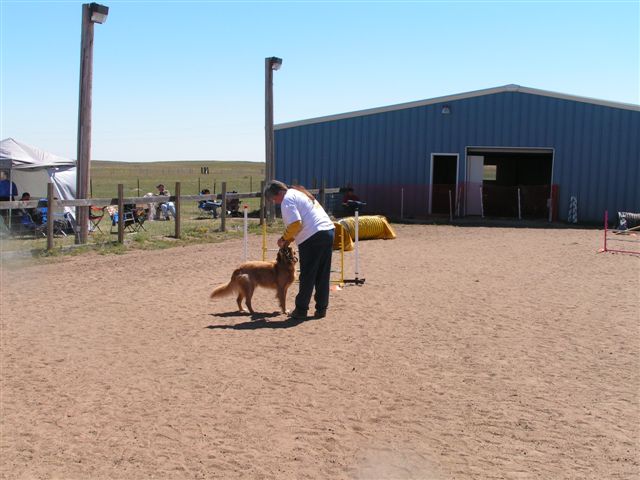
As I watched them run the first few exercises, I knew that distance wasn’t the issue.
“How do you usually reward him?” I asked. “We either play tug or I give him treats,” she replied. I asked if she ever threw a toy ahead of him, and she told me that she was taught that more interactive play was a better reward, and she shouldn’t throw a toy because it gave him a chance to run away with it.
The Real Reason Your Dog Keeps Running Back to You
Joanne’s dog was running back to her in anticipation of the reward. He had learned that the only place he was rewarded with play or food was in front of her, so he had no motivation to continue on a line. He also didn’t know when the reward was coming, so he checked back frequently, just to see if it was time for a treat.
A key concept for working at a distance with your agility dog is rewarding your dog while he is away from you during training. One of the biggest mistakes I see handlers making is sending their dogs out to work at a distance but consistently rewarding from their hands, whether with a toy or food.
Where you reward matters. If you always reward your dog when he is close to you, he has no motivation to move away and work at a distance.
Five Ways to Reward Your Agility Dog For Distance
Here are five ways you can reward your dog at a distance to encourage him to work away.
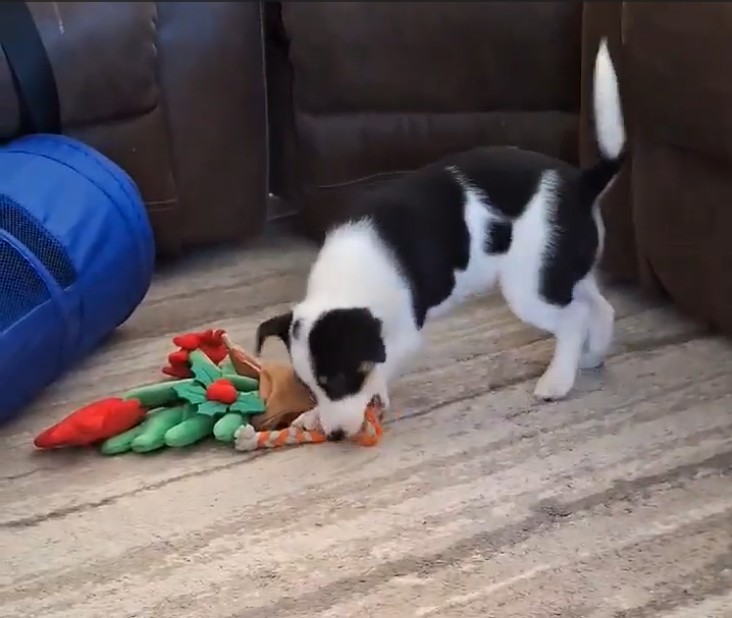
Method 1: Throw a Toy
If you have a dog who is eager to work for toys, it is easy to reward at a distance. You can either throw the toy directly to your dog if he is in a stationary position like the bottom of a stopped contact, or you can throw it ahead of your dog to encourage him to stay out on the path. When he gets the toy, you can meet him halfway to play tug or throw it again. Having a word that lets the dog know the reward is coming is helpful as well, and can keep your dog from “checking in” constantly to see if a reward is available.
Method 2: Toss Treats
It takes a little more skill to toss small treats compared to toys, but it can be done! The same principles apply. You can throw directly to the dog if he is in a stationary position, or throw ahead of the dog when you want them to continue to move forward after the last obstacle in the sequence.
If you are throwing treats, make sure they are large enough for the dog to see, and preferably are not the same color as the surface you are working on. That way the dog can quickly find the treat, eat it, and be ready for the next exercise.
Method 3: Use a Sealed Container or Toy
You can place a sealed container or pouch-type toy at the end of your distance exercise to give your dog something to drive toward. If you use this method, the MOST important thing to remember is to open the container and then step away and let your dog get the treat rather than rewarding from your hand. The purpose of rewarding away is to decouple the reward from you being present so your dog doesn’t always run back to you for a reward.
This method is popular with people who don’t want their dogs to “cheat” and run straight to the reward without taking the obstacles. Over the years, I’ve become a big fan of doing a few things that eliminate the issue. First is setting up exercises that your dog is very likely to be able to complete. Second is doing some foundation training to teach the dog that they need to “work to win” or complete a task before getting the reward. The third thing I am incorporating into my training is a word that lets the dog know it is okay to get the reward, known as a reward marker.
Method 4: Train With a Partner
If you’re working at greater distances, sometimes it can be useful to have a training partner ready to toss a treat or toy when your dog completes the sequence. Your partner should try to avoid making themselves part of the environmental cues, so they should avoid standing on the landing side of the final jump or at the bottom of the contact. Otherwise it will be an additional piece to fade before your dog is ready for competition.
It is also vitally important that they reward away from themselves so your dog doesn’t start running directly to them whenever they are on the course. It’s horrible when a dog sees a bar setter in the ring that they have gotten rewards from and decides they are more interesting than completing the course.
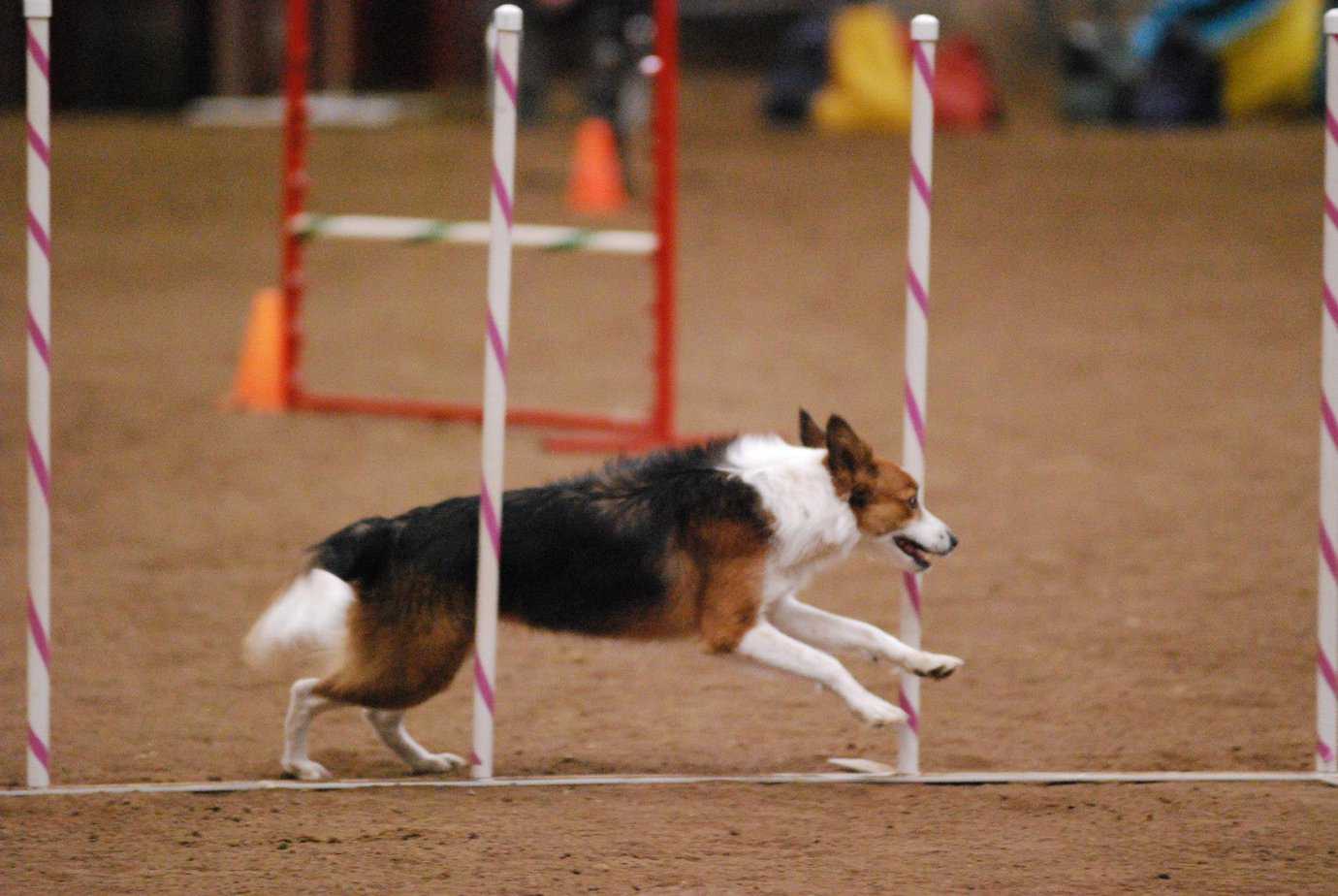
Method 5: Send to a Mark Bucket or Other Target
If you take some time during your foundation training to build a lot of value into having your dog put his front feet on a mark bucket or target, you can use it to provide your dog with a destination, and then move close enough to toss a toy or treat to him while he is there.
Mark buckets and targets are especially useful for exercises like moving forward in a straight line. You can maintain your position at the beginning of the sequence, send the dog to the mark bucket, and then move forward to reward once the dog is there.
Building good reward habits is one of the foundational skills we work on inside The Agility Playground. If you want a structured approach to distance training from the ground up, take a look at what the membership includes.
What Happens When You Change Where You Reward
Where you reward your dog is just as important as how you reward him. If your dog keeps checking in or running back to you mid-run, take a look at your reward placement before assuming it’s a distance problem. In most cases, shifting where the reward happens is enough to change the picture entirely.
Joanne figured that out, and a few weeks after we worked on these methods she emailed me: “I just wanted to let you know that it’s working! I haven’t come close to tripping over him at all this week, AND he is starting to move forward and watch for me to throw his tug toy to him at the end. This has been a game-changer for us!”
That is exactly what good reward placement can do for your team.
Want to keep building your distance foundation? Read Five Dog Agility Distance Skills That Are Essential for Every Team or explore 3 Ways to Regain Distance From the Line in Dog Agility for more distance strategies.
You Might Also Like…
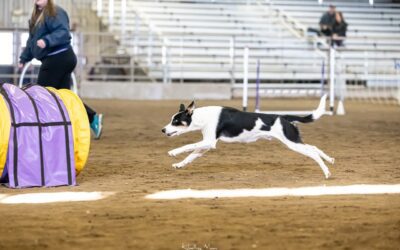
The Complete Guide to Dog Agility Distance Handling
Dog agility distance handling isn’t magic — it’s a skill any team can build. This complete guide covers the 5 essential skills, the 6 Cs framework, how to train distance, and the most common mistakes to avoid.
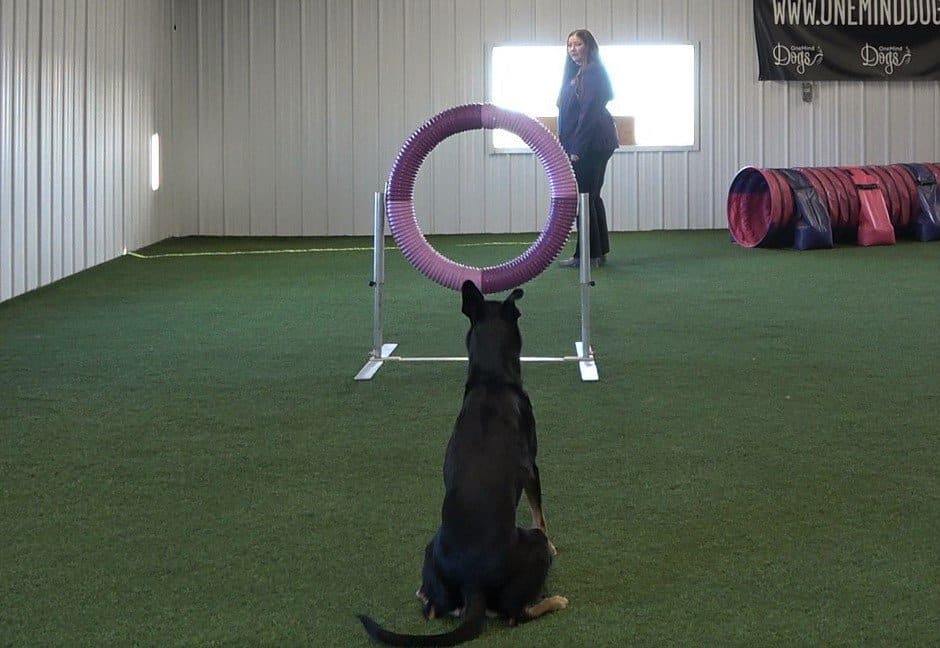
Dog Agility Distance Training – What is the CLAWS Framework?
Independent obstacle performance is the foundation of dog agility distance training. Learn what CLAWS means and how this simple framework can transform your distance work.
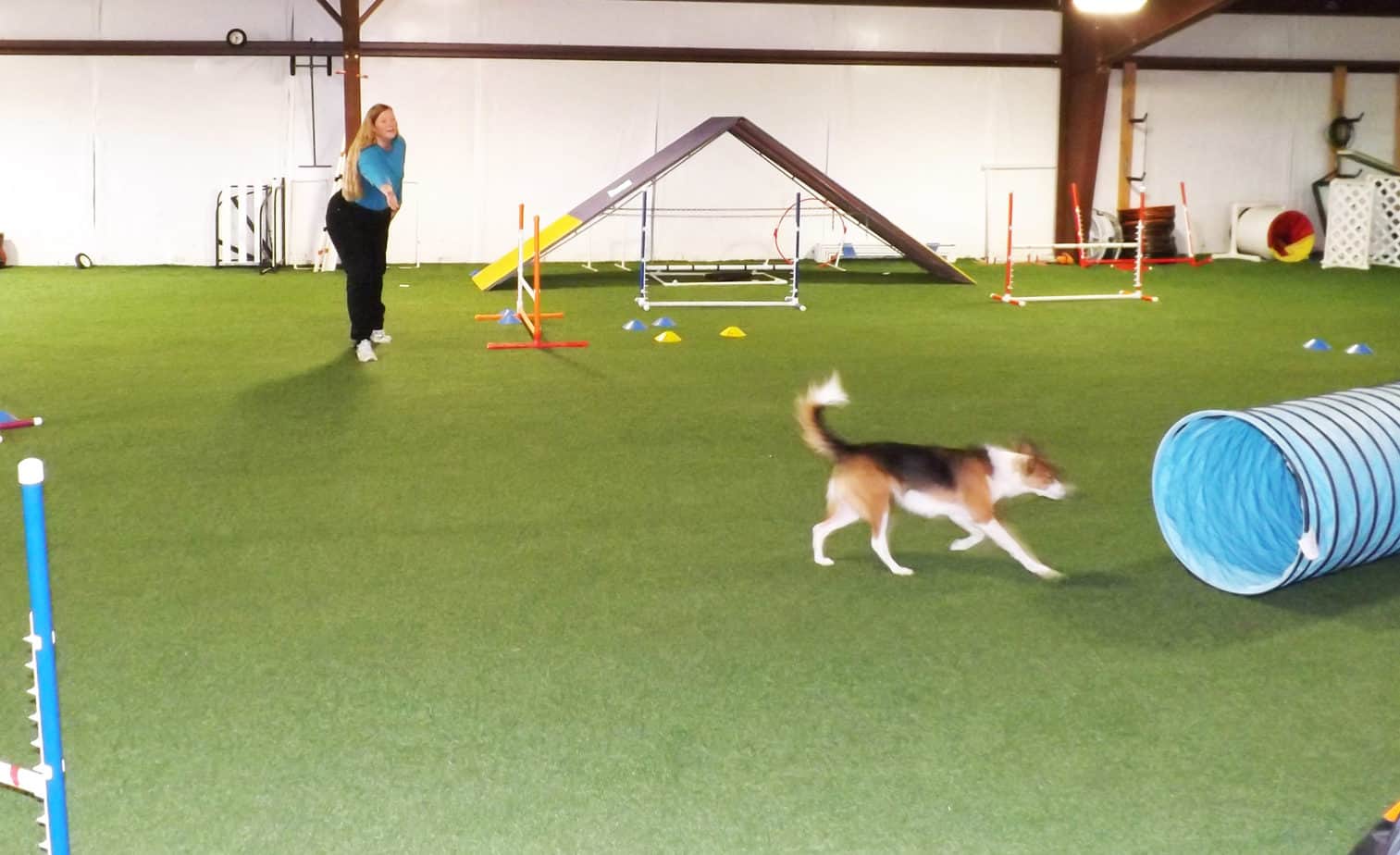
5 Dog Agility Distance Skills That Are Essential for Every Team
Want to succeed at Gamblers, FAST, and Chances? These 5 dog agility distance skills are what every team needs to handle distance confidently and consistently.
Get tips, stories, discounts, and early notification of events and new courses delivered straight to your inbox! Join the community!
Cover photo: Courtesy of Doug Burns
Second photo: Personal photo
Third photo: Personal photo
Fourth photo: Courtesy of Dog Agility Photos for Fun