
Written by Lorrie Reynolds
*Note: This is a “generic” story because it happens in almost every seminar.
I finished explaining the exercise we were doing to assess how independent each dog’s performance was on the A-Frame. Then I asked the question I dread.
“What’s your criteria for your dog’s contact performance?”
Student #1 said, “Hit the yellow.” Hmmm.
Student #2 said, “Two-on/two-off.” Better.
Student #3 gave me a blank look and said, “Criteria?”
And on it went. It wasn’t until I got to the seventh student that I got a (mostly) full answer. “Run at speed up and over the A-Frame and get all four feet in the yellow before continuing.”
Student #7 had a pretty good idea of what she wanted, although for independence, I usually add “…regardless of my motion or position.” to remind myself to teach the four elements of independent obstacles.
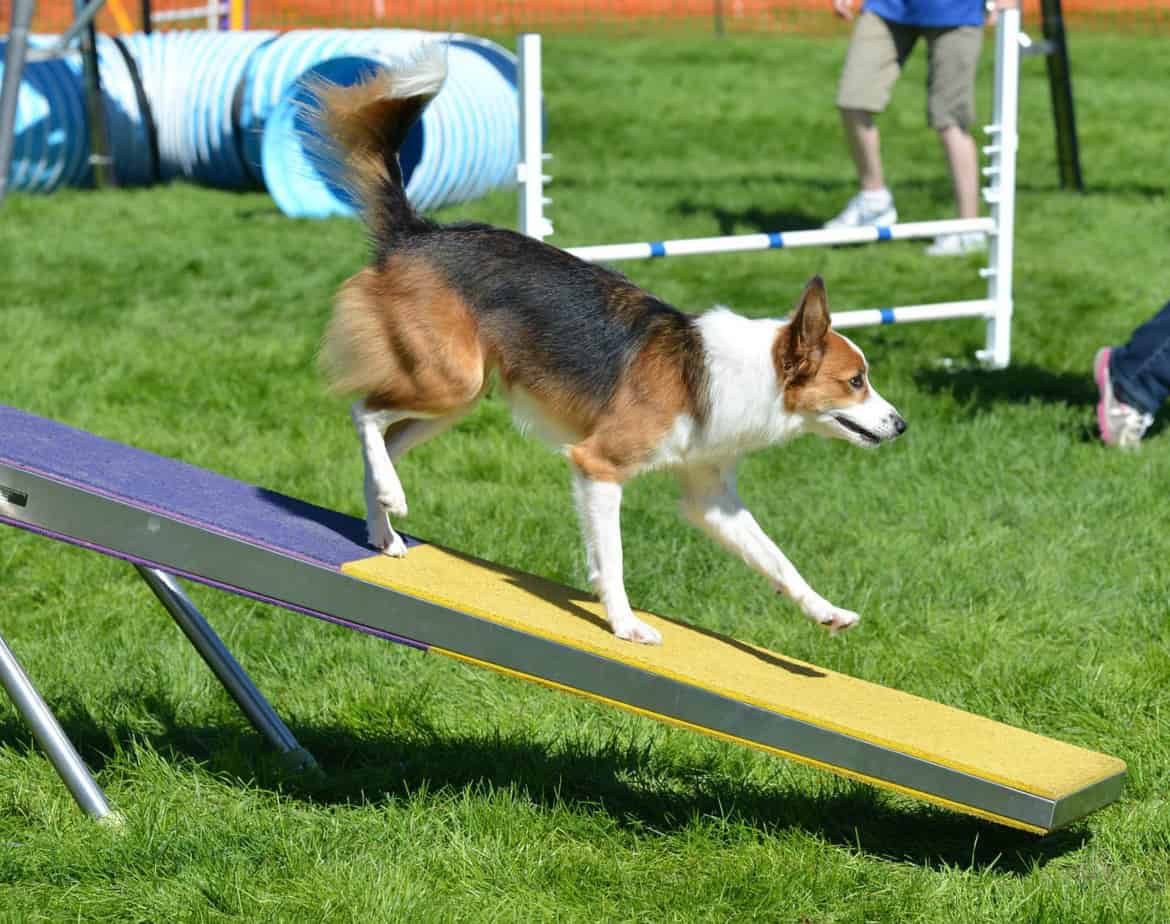
Then I asked question number two. “How do you know what or when to reward?” Again, the answers varied from rewarding any “close” attempts to “I only reward if all four feet hit the yellow.” Judging that is a separate conversation!
If you’re student #3, it’s okay! Here’s a quick explanation for you. Performance criteria describes how the ideal behavior will look. It is the goal you are striving for when a behavior is “fully trained”. It’s how you know what steps to take in your training and when to reward.
I’ve started including a short lecture on performance criteria in every seminar. It basically starts like this, “You can’t expect the dog to understand what you want them to do if YOU don’t know what the correct performance looks like. You’re not going to know what to reward if you don’t know where you are headed.”

Today’s dog training tip
Determine performance criteria and plan the steps to get to your desired behavior before you start training the behavior. If you don’t know what you’re rewarding or where you are going, you can’t expect your dog to know what you want.
Training is smoother, easier, and faster if you follow Stephen Covey’s advice and “Begin with the end in mind”.
To learn about setting criteria during training sessions, see the article Lower Your Criteria When Teaching New Agility and Tricks Skills.
You Might Also Like…
Handling a Fast Agility Dog: Pinto or Ferrari?
If your new agility dog is a move up from a slow or moderately-fast agility dog to a speed racer, here’s some advice to make your life easier.
Dog Agility Contact Training: Do You Really Need Running Contacts?
Which dog agility contact method, running or stopped, is right for your team? The answer might surprise you.
Should I Use Verbal Cues for Dog Agility?
How important are verbal cues for dog agility? Find out in this article that explains how your dog perceives verbal cues on the agility field.
Teeter photo: Courtesy of Dog Agility Photos for Fun
Photo in graphic: Courtesy of Doug Burns