
Written by Lorrie Reynolds
Are Verbal Cues Important for Dog Agility?
One of the more controversial topics at my seminars is verbal cues for dog agility. My goal is to teach distance handling for agility in a way that is natural to the dog and that blends seamlessly into many different handling systems. However, I do have my beliefs and preferences, and one of those beliefs is that without extensive training, verbal cues are low priority to your dog.
Have you ever called a dog walk an A-Frame? Or a tire a tunnel? Did your dog go looking for the correct obstacle? I’m betting not. He went with your body language and took the obstacle you were moving toward or indicating rather than the one you called out verbally.
Does that mean he didn’t hear what you said? Not necessarily. However, the other cues – your motion and body language – were far more important to him than what came out of your mouth. Without intensive training, dogs respond to motion, body language, and even to environmental cues long before they process language.
Successful distance handling for agility, using cues that the dog naturally understands, relies heavily on clear body cues rather than spoken ones.
Can Dogs Really Understand Verbal Cues?
Although dogs can definitely be vocal, they aren’t inherently verbal animals. Their communication isn’t about spoken (or barked) language. It revolves around body language and expressions – the tightness of the mouth, the set of the ears, the body posture, the tail set, and more. When it comes to verbal cues for dog agility, you absolutely can teach your dog English (or Spanish, or Russian) words, but words are far more difficult for them to learn than body language cues are. Breed makes a difference too. Dogs who have been bred to work closely with humans seem to have an easier time picking up verbals than dogs who have been bred to work independently – think Herding dogs versus Livestock Guardians.
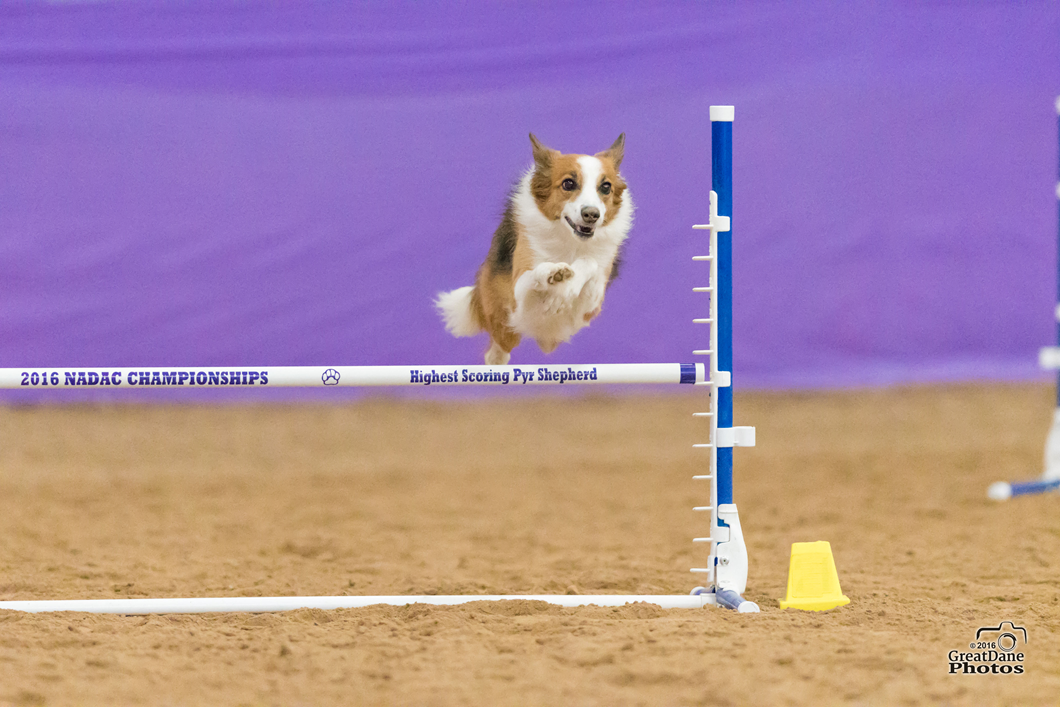
Pixie (Border Collie/Sheltie) is pretty good with verbals. She can go downstairs and get her tennis ball and then bring it back when I speak in sentences, but it is very doubtful she understands all of the words that I’ve said. More likely, she recognizes “ball” because it is her favorite, sees me looking at the stairs, and knows from experience that if she brings it to me, I will throw it for her. The hardest part is probably object permanence (knowing something exists even if you can’t see it), and remembering what she went downstairs for. I share that last difficulty sometimes!
When you are pondering your dog’s understanding of verbal cues, think about teaching a puppy to sit. We can easily teach it on a physical cue, like a palm brought up toward the ceiling. It takes much more time for them to learn the verbal cue that goes with the hand signal, and with some breeds, they may never get it consistently.
How Dogs Actually Read Cues on the Agility Course
When we first start teaching agility, we say “jump” at every jump, or “tunnel” at every tunnel. However, those cues are more for us – to keep us on track when we are still learning. They do give our dogs an indication that they should do “something” when we speak, but if we continue to name every obstacle on every run, we risk becoming Charlie Brown’s mom, sounding like nothing more than a nagging and incomprehensible noise to our dogs. In essence, we teach them to ignore us.
How I Use Verbal Cues in Dog Agility Training
I do use verbal cues to indicate a change, like a turn away, a collection for the weaves, or continued motion forward. Every single one of my verbals is backed up by body language though, and I don’t rely strictly on them to get my dog through the course. Verbal cues in agility, because they are not natural to your dog and take time to teach, are really a handler’s choice. It boils down to where you want to spend your time and effort training. I would rather spend my time teaching independence and handling than teaching my dog 11 different verbal cues for a jump.
If you are going to use verbal cues in any capacity, the main thing to remember is to use them consistently, because once you call the wrong thing, you start muddying your cues. One way to stay consistent is keeping a list of your agility cues so you know exactly what signals your dog should respond to.
Timing also matters. Knowing when your agility dog needs the next cue can prevent confusion on course. And just like cues, reward location in dog training influences what your dog actually learns. You can definitely help your dog learn what your cues mean by pre-placing a reward to help him understand what you want.
Clear communication, for any type of cue, begins before you even release your dog, when you are setting your dog up for success at the start line. He determines where he is going after he is released by where you are standing, whether you are moving or not, and which way you are facing.
If you want to learn what is truly important to your dog, join us in The Agility Playground, where you’ll learn all about the hierarchy of cues and how to use your dog’s natural language elements to help you navigate around the course.
Do you use verbals for agility? Have you tried running a course silently to see what happens? Leave a comment below and let us know!
You Might Also Like…
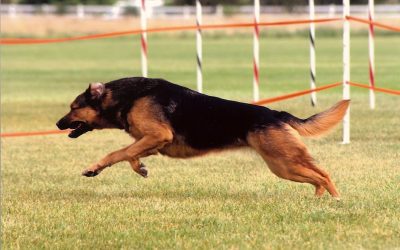
Handling a Fast Agility Dog: Pinto or Ferrari?
If your new agility dog is a move up from a slow or moderately-fast agility dog to a speed racer, here’s some advice to make your life easier.
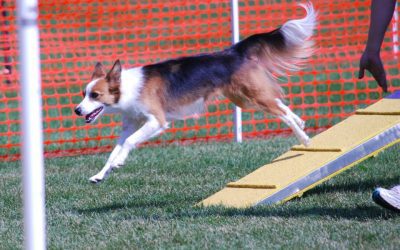
Dog Agility Contact Training: Do You Really Need Running Contacts?
Which dog agility contact method, running or stopped, is right for your team? The answer might surprise you.
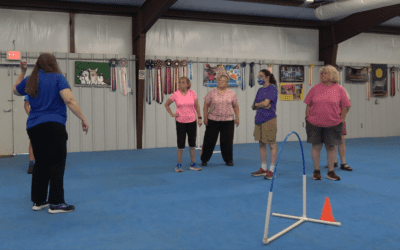
5 Ways to Crush It at Your Next Dog Agility Seminar
Going to a dog agility seminar so you can learn with your dog? Check out these five tips to maximize your return on investment!
Cover photo courtesy of CO Agility Photography
Third Photo: Copyright 2016 Great Dane Photos. Used with permission.