Environmental Cues in Dog Training – Avoid This Mistake

Written by Lorrie Reynolds
Creating Environmental Cues in Dog Training
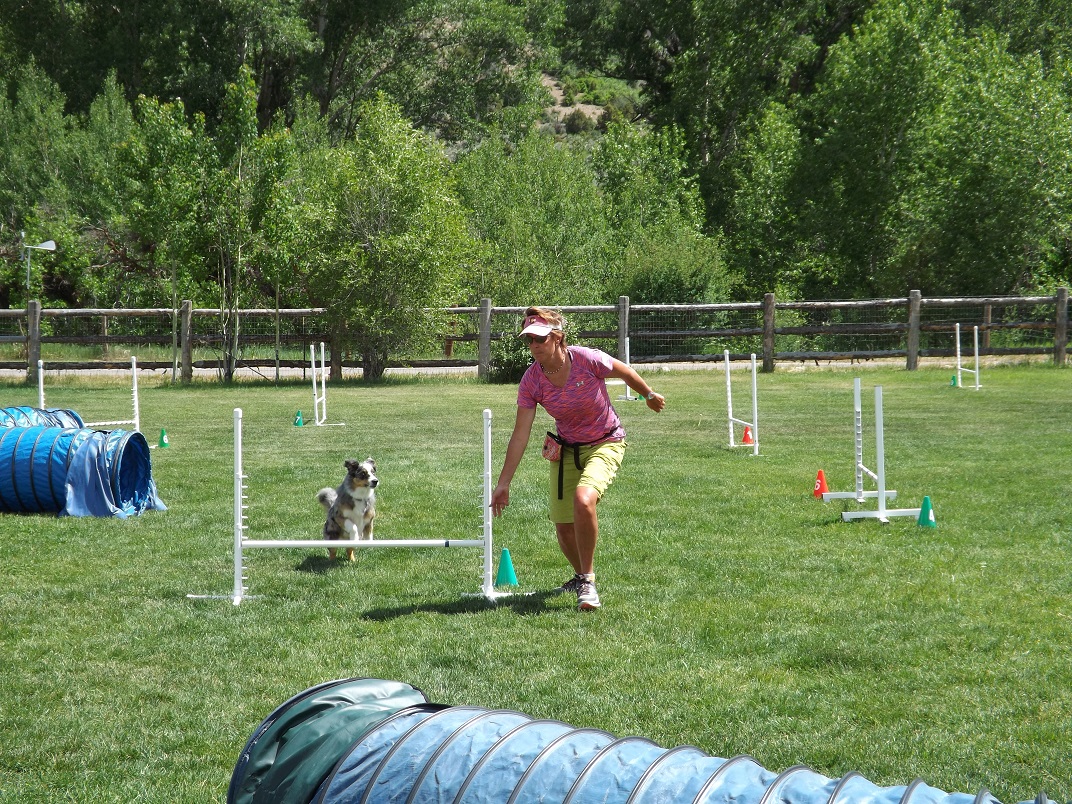
Do you have to do the “weave pole dance” for your dog to weave? Do you have to be standing in front of your dog for him to sit, or stand next to the contact zone for him to stop on it? If so, you’ve created environmental cues in dog training and your dog is dependent on your position, body language, or some other condition .
What is an environmental cue? It is something in the environment (in this case, a person) that helps the dog determine which behavior to perform. We use them to our advantage when we designate certain equipment for specific activities, like always using the same harness for carting, or taking our dog’s mat to a class for him to station on. However, sometimes we create them unintentionally, and they become a hindrance to getting our dog to work independently.
Testing Your Dog’s Understanding
The best way to determine if you have taught your dog to rely on your position as an environmental cue is to test his understanding of the cues in various situations. Can your dog sit if he is behind your back? Will he take the teeter if you are behind him? Can he hit the contact if you are across the room? Try asking for a known behavior but altering your position or your body language. If your dog can only perform it when you are in the “normal” spot, he is relying on that as part of his environmental cue.
Train With Independence In Mind
To avoid becoming part of the cue your dog needs to perform a behavior, train for independence from the start. Alter your position relative to the dog, your distance, and your body language as your dog is learning the behavior so it won’t affect him if you are not always in the same place.
Teach a trick when you are sitting down in front of him, and standing to the side. Incorporate a bit of distance into whatever you are doing, and face different directions rather than always facing your dog. The Essential Tricks for Agility Dogs online course has a wide variety of suggestions for teaching the tricks that ensure you are training independence.
Fixing A Behavior That Relies On You
You’ve tried the tests and realized that you are part of the environmental cues your dog needs to perform. What now?
For simple behaviors, retraining is pretty easy. If your dog will only sit in front of you, retrain him, using luring if you need to, and begin as if he doesn’t know the behavior at all. Bring him to your side, facing the same direction as you are, and teach him to sit all over again. Move him to the other side and repeat the process. Start adding a bit of distance, or turning 90 degrees before giving him the verbal cue. With simple, known behaviors, it is a fairly quick process to get your dog to understand that down means down, no matter where he is in relation to you.
For more complex behaviors, the retraining process is a little slower. If, for example, you have always stopped in the same place when you want your dog to hit the dog walk contact, you’ll have to work on slowly altering your position from the end, taking a step forward and rewarding for maintaining his contact position, stopping just slightly short of where you normally do, or moving slightly further away from the obstacle.
Gradually increase the difference in your position relative to the end until your dog is successfully hitting the contact with you halfway to the end, five feet ahead of the end, or 5 (or more!) feet laterally away from the contact zone. Then you can begin adding motion, crosses, and other changes to your position. Your dog will figure out that he can still meet criteria, even if you aren’t there as a marker.
Today’s Tip
The best way to avoid becoming an environmental cue is to train independence from the start, but if your dog is already relying on you being in a specific place, you can retrain him by making gradual changes, until he understands that you don’t need to be there at all.
You Might Also Like…
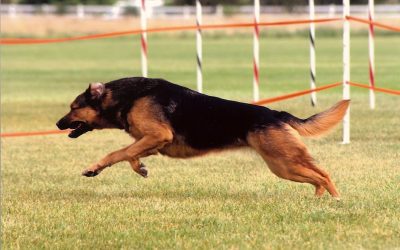
Handling a Fast Agility Dog: Pinto or Ferrari?
If your new agility dog is a move up from a slow or moderately-fast agility dog to a speed racer, here’s some advice to make your life easier.
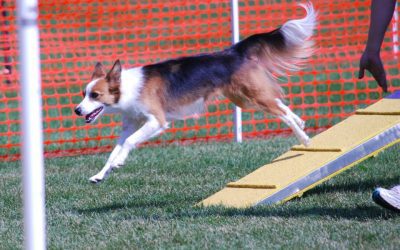
Dog Agility Contact Training: Do You Really Need Running Contacts?
Which dog agility contact method, running or stopped, is right for your team? The answer might surprise you.
Should I Use Verbal Cues for Dog Agility?
How important are verbal cues for dog agility? Find out in this article that explains how your dog perceives verbal cues on the agility field.
Get tips, stories, discounts, and early notification of events and new courses delivered straight to your inbox! Join the community!
Top photo: Copyright 2018 Great Dane Photos. Used with permission.
Second photo courtesy of Howling Moon Photography.