
Written by Lorrie Reynolds
Have you ever seen something, in person or on video, that made everyone else laugh, but made you cringe? By now, I’m sure you’ve seen the viral video clip of the little Golden Retriever puppy going through the weaves and epically failing on the jump. I was more than a little horrified to see that clip popping up everywhere.
There are SO many things wrong with that clip – the dog being on leash, weave poles at a young age, going over a jump with no foundation, the height of the jump, and the fact that a puppy that young has no business being on equipment.
Here’s the bottom-line truth. The puppy in that video wasn’t mentally or physically ready for what he was being asked to do.
Dog Sports – Is Your Dog Ready?
Repeatedly asking dogs that aren’t mentally ready to do an activity erodes their confidence. They can become fearful, disconnected, or display over-the-top energy and get “the zoomies”. Asking dogs to perform behaviors that they aren’t physically ready for is just as damaging. It also erodes their confidence, but more importantly, can cause permanent injury.
I’ve seen people trying to get their dogs to do a handstand in one day. I’ve seen videos of people putting their dogs up on a peanut or balance ball and expecting them to immediately do tricks on it. While I love canine conditioning and think it can be beneficial for every dog, dogs need to be mentally and physically ready for what we are asking them to do.
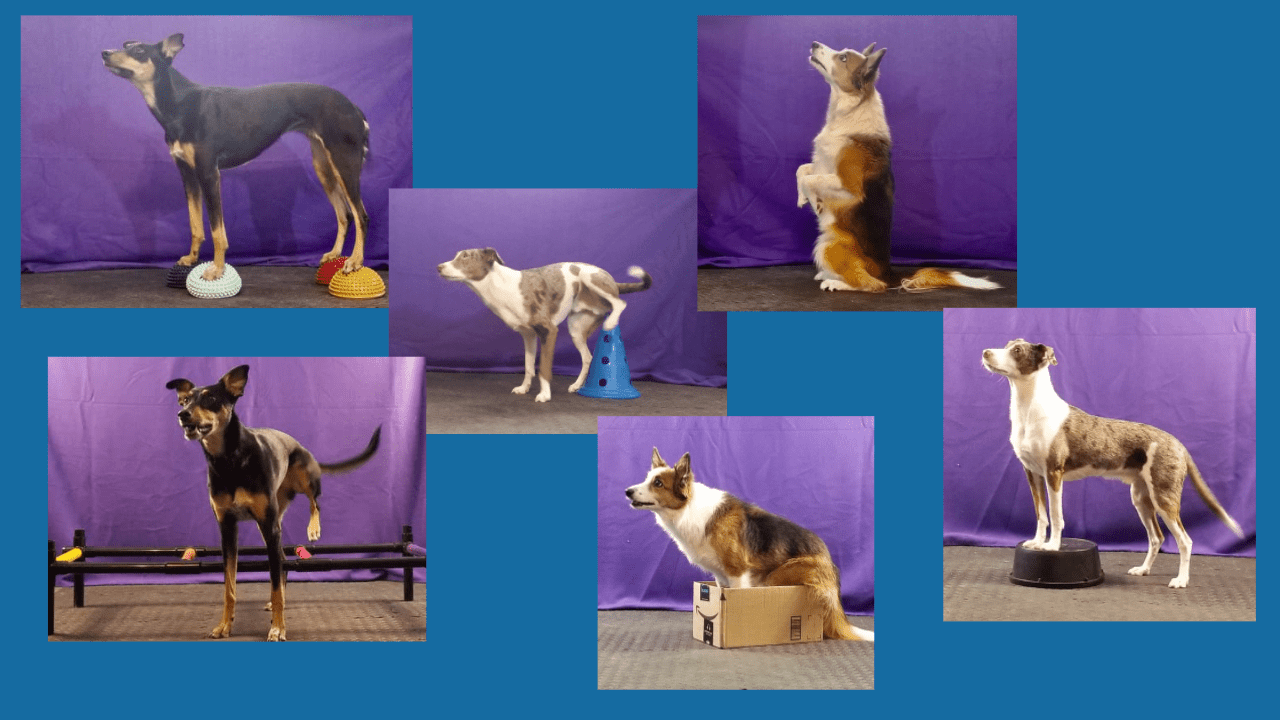

Today’s dog training tip
Start any canine conditioning program slowly. Even if a dog is mentally ready and eager to “work”, it takes time to build muscle and gain the physical abilities required for some of the exercises. Make sure you are guided through an online course or in person by someone with experience, and always check with your veterinarian before starting.
It’s normal to be excited about a new training program or goal for a title, but starting within what the dog is mentally and physically ready for keeps the dog safe, healthy, and engaged.
You Might Also Like…
Handling a Fast Agility Dog: Pinto or Ferrari?
If your new agility dog is a move up from a slow or moderately-fast agility dog to a speed racer, here’s some advice to make your life easier.
Dog Agility Contact Training: Do You Really Need Running Contacts?
Which dog agility contact method, running or stopped, is right for your team? The answer might surprise you.
Should I Use Verbal Cues for Dog Agility?
How important are verbal cues for dog agility? Find out in this article that explains how your dog perceives verbal cues on the agility field.